God Carried to Carry Others
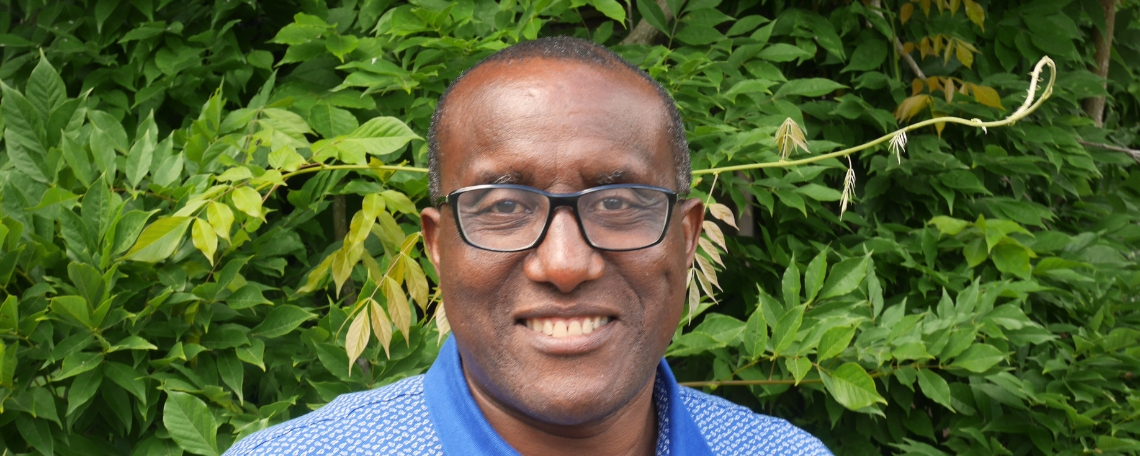
Emmanuel Ndikumana’s life begins with his name. He explains that ‘Ndikumana’ is literally translated as God carries me on His back like a mother carries her child,
Identity, culture and faith have always been intertwined in Emmanuel’s journey.
Born in Bururi, in southern Burundi, close to a Swedish Pentecostalmission base, Emmanuel’s early childhood was shaped by faith and family.
But at the age of four, everything changed. In 1972, ethnic violence exploded in the region and his father, a Hutu, and several male relatives were killed. To this day, he does not know exactly how his father died. Like many widows and children of that period, his family were left without answers. Those early losses deeply shaped Emmanuel, planting questions that would follow him into adulthood and eventually into academic research.
Leadership, Formation and Cost
In the 1990s, as Burundi plunged into another ethnic war following the assassination of the elected Hutu president, Emmanuel found himself leading the student movement of the International Fellowship of Evangelical Students in Burundi (IFES). He was responsible for around 200 students, both Hutu and Tutsi, who were committed to demonstrating the power of the Gospel in the midst of violence. It was an extraordinary burden for the then-25-year-old leader.
After three intense years and close to burnout, he was encouraged to take a break in the United Kingdom. That season of rest became transformative. At the London Institute for Contemporary Christianity, he encountered the teaching of John Stott. Emmanuel says, “After one week of sitting under his teaching, I was renewed.” What began as a short break grew into a mentoring relationship.
Stott later visited Burundi, saw the student ministry in the midst of war, and challenged Emmanuel to complete his university studies. Emmanuel describes him as someone who stood behind him for many years, encouraging both his intellectual growth and spiritual depth.
Emmanuel’s theological journey, however, was not without cost. Raised in the Pentecostal Church, he credits it with shaping his prayer life and love for Christ.
At university, he encountered committed Christians from other denominations whose lives clearly reflected Christ. This challenged his understanding of church boundaries. He struggled with why communion and fellowship were restricted to one denomination when genuine faith was evident beyond it.
When he raised these concerns with church leaders, misunderstanding followed. Though known as an effective evangelist, due to his criticisms of the church’s legalism, he was released from his formal leadership roles. While Emmanuel did not return under denominational restrictions, reconciliation took place. That season shaped his theology profoundly.
He believes that faith must prepare believers not only for heaven but also for navigating the broken realities of this world.
A Vision for a United Church
After twelve years of civil war, Emmanuel became convinced that the church, despite its weaknesses, remains God’s chosen agent of transformation, but it needed renewal from within. This conviction led to the formation of Partners Trust International Church (PTIC). Its vision is simple: a united church, holistically transforming communities in Burundi. For Emmanuel, unity requires trust, and trust is fragile in traumatised societies. In a country where many have been both victims and perpetrators at different points in history, reconciliation cannot be shallow. It must engage forgiveness and justice together.
These tensions formed the foundation of his doctoral research at the Oxford Centre for Mission Studies. In post-war Burundi, international frameworks emphasised prosecution and accountability, while the church proclaimed forgiveness, even for grave sins. Emmanuel wrestled with how these realities could coexist.
As he explains, “Forgiveness is possible. Justice is necessary. Reconciliation is achievable.” Rather than choosing one over the other, he argues that true reconciliation requires all these, understood through the cross. His research, examined within a rigorous academic context, now shapes his preaching, leadership engagement, and training programmes across the country.
One of the most visible expressions of this is the Great Lakes School of Theology and Leadership (GLSTL), where he serves as Rector. Emmanuel emphasises that excellence and integrity are non-negotiable values.
Through GLSTL, Emmanuel’s lifelong conviction continues to unfold: the church must be united, intellectually grounded, and morally steadfast if it is to transform Burundi
Emmanuel speaks of hope for the nation with quiet certainty: “I have no reason not to hope.” Having walkedthrough this journey of loss, rejection, and war, he now carries a clear vision: a reconciled church can shape a reconciled nation.
If you would like to hear more of Emmanuel’s journey, have a look at this podcast-style interview: